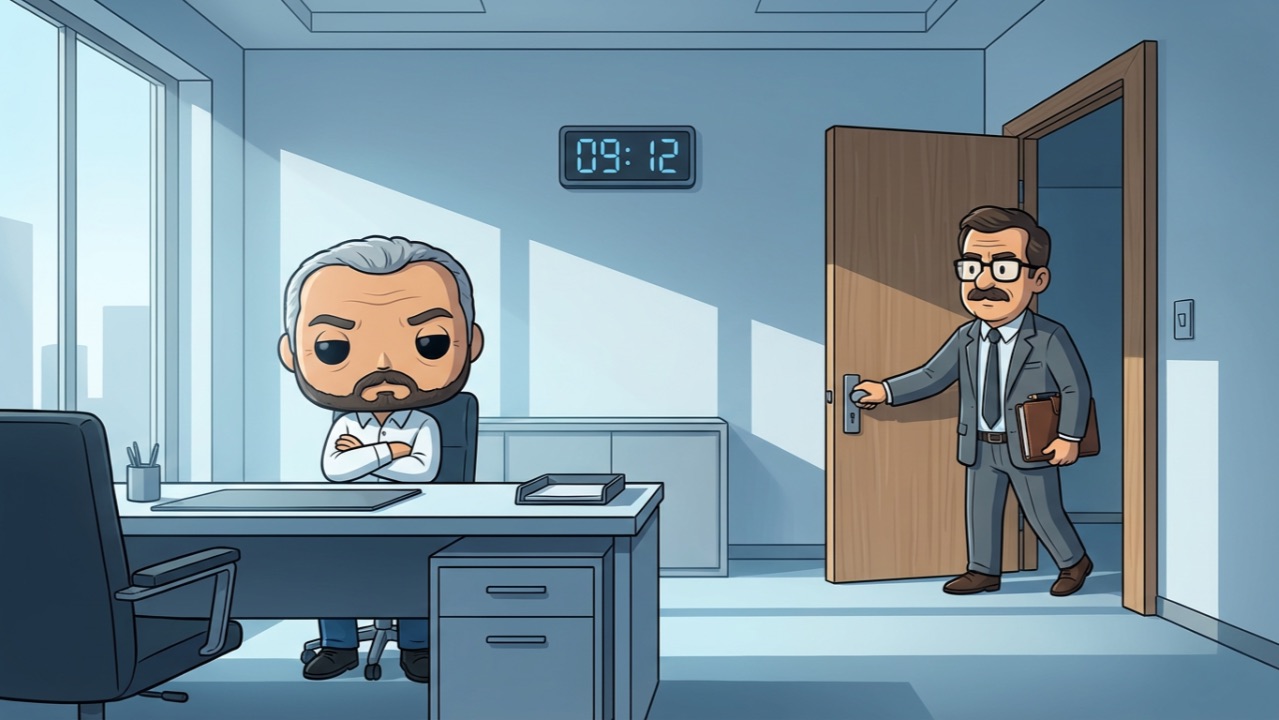
Monday. 09:12. My office door opens with decisiveness. Not haste. Decisiveness. The kind carried by people who believe they've understood something important.
Manolo walks in with a printed sheet of paper in his hand. Printed. Bad sign.
—Dude —he says, without a hello—, I've been reflecting on leadership.
I lean back in my chair. I breathe. This is going to take a while.
—Being a leader is inspiring, communicating vision, aligning teams, generating impact... getting people to follow you.
He nods as he says it. You can tell he likes how it sounds.
—And being a good person? —I ask.
—That comes later.
Silence.
Not an awkward silence, a revealing one.
Manolo thinks leadership is a skillset. A bundle of abilities you unlock over the years. As if empathy were a plugin and ethics a "nice to have" feature you build once you already have users.
—Manolo —I tell him—, you can be brilliant and still be an asshole.
He doesn't take offense. That's the worrying part.
Because the world is full of smart, ambitious, effective Manolos who treat people as "resources" and then can't understand why nobody tells them the truth when things go south.
—Jose, don't exaggerate. This isn't personal, it's professional.
—No, Manolo. That's exactly what someone says when they don't want to take responsibility for how they treat others.
Leadership doesn't start when you speak well. It starts when you listen even when it doesn't suit you. It isn't proven when you get things right. It's proven when you admit you screwed up... and the world doesn't end.
And they don't teach that in the INSEAD MBA. You learn it when you have power... and decide not to use it as a weapon.
Manolo flips through his sheet...
—It says here that a leader has to push the team out of its comfort zone, Jose!
—Sure, but pushing isn't the same as crushing, Manolín.
I remind him, almost without meaning to, of something Drucker said decades ago: that leadership isn't about effectiveness, it's about credibility. And that without character, effectiveness only helps you do damage faster.
Manolo shifts uncomfortably.
—But look at it from the business point of view... —The business doesn't trust you. People do. Or they don't. And that shows long before the EBITDA does.
I give him real, painful examples, the kind that make you feel like garbage if you see yourself in them...
—I've seen you talk about "taking care of the team" and then quietly squeeze salaries.
—I've seen you promise autonomy and then overrule people in public.
—I've seen you talk about culture... and fire people over Zoom.
And then you're surprised that the team smiles in meetings... but doesn't follow you when it's time to row, Manolo...
Because nobody follows the most brilliant one. They follow the most reliable one.
Manolo tries to defend himself.
—But I do what's best for the company.
—That's what everyone who confuses results with people says.
Daniel Goleman explained it better than I ever will: effective leaders don't stand out for their IQ, but for their emotional intelligence. For their humanity. For their ability to not behave like an imbecile when they have the upper hand.
And there's the trap: leadership doesn't improve character. It amplifies it. If you have integrity, you generate trust. If you're a cynic, you generate fear. If you're a polite bastard, you generate silence.
Manolo lowers his gaze.
—So... what is being a leader, Jose?
—Being someone decent when nobody forces you to be.
—Being consistent when there are no cameras.
—Being fair when you could come out ahead by being unfair.
Everything else — vision, strategy, communication — only makes more visible what you already are.
He gets up slowly. Folds the sheet. —I need to think about it.
—Do that, Manolo. But one more thing: if people only follow you when everything's going well, you're not a leader. You're a slide presenter with good luck.
He closes the door.
And I'm left thinking that the problem with modern leadership isn't a lack of talent. It's a lack of decency... in a nice suit.
Happy 2026.